|
Dutch POW Martin Hollering |
Kamaishi Main Sendai 5 Dutch
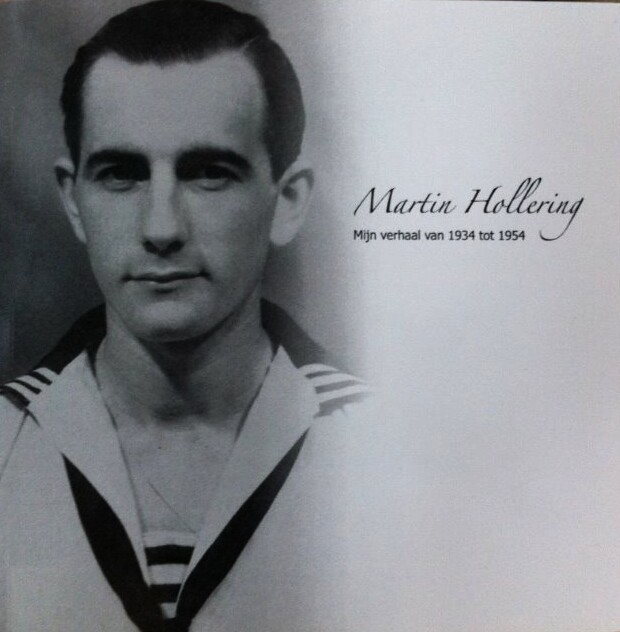 Source: Email of 12 July 2008 (Edited by Center for Research)
I have been looking again at the memoirs which my father wrote
down. He writes he left Java on the 25th of September (his birthday!!
His 26th) from Tandjong Priok aboard of the Makassar
Maru. He describes it as a small boat and guesses
it had about 5000 tons [arrived Singapore 29 Sept 1943].
After four days they came to Singapore. In cars driven by Sikhs (collaboraters of the Japs??), they were transported to a camp which was an old English camp. The camp was still under English control and in front was an English guard with all his insignias (from the Dutch, the Japs had already taken all the insignias in Indonesia). The Dutch felt very bad, because they felt that not only were they POWs of the Japs, but now even of the English!! They had to ask the English for everything. The Dutch commander was Colonel Roelofs. My father writes also about the Geneva Convention and that the Japs did not stop saying that they did not sign the Convention. During their time there, they had to work constructing a new airport. After a few weeks stay, the same cars with Sikhs came and they were transported to the port and boarded the Matue Maru [most likely the Amatsu Maru], a ship of 10,000 tons. He describes it as a transport ship for troops, filled with copper ore. In between the decks, they had built racks/stays for the soldiers -- but for the small Japanese, and they were much too small for the tall Dutch. Apart from that, there were a lot of rats as big as rabbits. Everyone was lying across each other and the Japs were walking over their feet and legs. The food came from upstairs twice a day through a gap. The loos were an outside board hanging over the edge of the deck. The men could go up there three at a time. They were sailing in a convoy following the Chinese coast line. After about six weeks, they arrived in Formosa (Taiwan). They stayed there under deck for a short time and continued their journey to Japan and arrived in Modji (Moji - now part Kitakyushu City). After eating, they had to walk to the train station and got on a real nice train and were escorted by Japs speaking English until Tokyo. They were very cold because they didn't have warm clothes, only their tropic uniforms. On the train they got "odja" [ocha] which means tea. On the station platform at Tokyo, they met a lot of German officers and white women. After a long period of waiting, they were transported by train arriving in Kamaishi, 72 hours to the north. From the station they had to run to their camp. My father writes at the end: "So there came an end to three-and-a-half years of deep misery and humiliation. I was no longer San Nana Pekke hadsji djou iets, or Number 1781, my POW number. I was a normal free man." Kindest regards, Mieke Capeder-Hollering |